
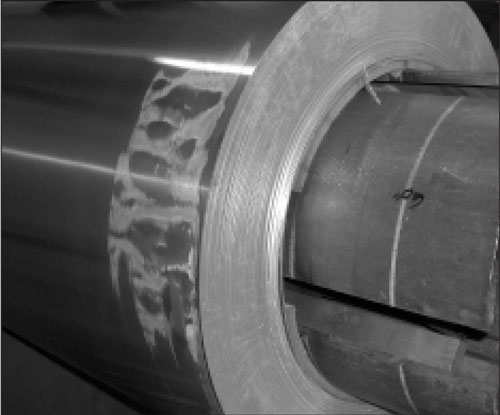
What is Waterstain?
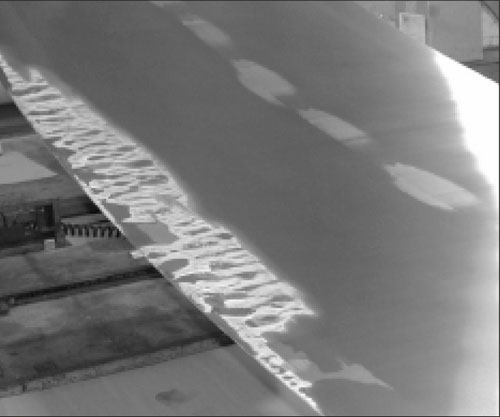
Sometimes, when a coil of aluminum is unwound, some patches of white, chalky stains can be seen on the surface. This is a sure indication that the coil has been exposed to moisture at some point. Although usually white, the colors of the stains can also be brown, black, or even show iridescent colors.
How does the staining occur?
Aluminum reacts with oxygen in the air to form a very tenacious oxide coating. It is this coating that gives aluminum its excellent corrosion resistance. Under most conditions aluminum will not react with water at all, but aluminum is very prone to waterstaining when water is trapped between mating surfaces, such as when it is in the form of a tightly wound coil or in a stack of flat sheet.
When oxygen from the air is prevented from reaching much of the aluminum surface, a chemical reaction occurs between the entrapped water and the aluminum. This results in a white hydroxide film forming instead of the usual transparent oxide film. It’s important to know that the stains have no significant effect on the mechanical strength. However, they can be unsightly and are often objectionable for esthetic reasons. They may cause processing problems where additional surface finishing or fabrication is to be performed.
Where does the water come from?
Waterstain can occur due to several causes. The most obvious is if the aluminum is stored in an area where they would be directly exposed to water. This includes storing it outside where it can get rained on or to water from a leaking roof or a leaking water pipe, or be exposed to any water splashes from nearby processing equipment.
Waterstain can still occur in an apparently dry storage area due to condensation. Keep in mind that air contains water in the form of water vapor. Warm air can hold more moisture than cold and so, if the air is chilled, it releases its moisture in the form of dew. A familiar example of this is the condensation of water that forms on the outside of a glass of cold liquid.
There is a risk of water condensing on an aluminum coil whenever the metal temperature is allowed to fall much below the surrounding air temperature or, in technical terms, water will condense on aluminum if the temperature of the metal falls below the dew-point.
Specific examples of how this may occur include:
- Moving cold metal from a cold truck directly into a warm storage area can result in condensation, especially on a humid day. Instead, the unopened package of cold metal should be placed in a cooler area, free from drafts, and allowed to warm up slowly.
- Moving metal from cold a warehouse to a warm factory floor. Same idea here, the metal should be allowed to warm up slowly.
- Leaving a warehouse door open, allowing cold air to enter and cool the metal. If the air temperature suddenly rises as the day gets hotter then water may condense on the coil.
How does the water get in between the wraps?
It is often a source of amazement that waterstaining can occur all the way across a wide strip despite only the edges of a coil getting wet. However the water is forced into the wraps of the coil by a strong force called capillary action. This is when very tiny gaps between the wraps of the coil cause it to behave like a sponge soaking up water.
If there is evidence that the package has been exposed to moisture when you receive the metal, then this should be noted on the receiving papers and you should notify your supplier immediately.
If water is already in contact with the metal, the only sure way to avoid waterstain is to process the metal immediately. If this is not practical then remove the water as quickly as possible by using fans to blow air over the metal. Do not use hot air as this can cause further condensation to occur.
Conclusion
Waterstain can be nuisance at the very least, and a greater challenge for applications with specific aesthetic requirements. We hope that in understanding what causes waterstain, you can be avoid it. The value of the aluminum and predictable production schedules justify the extra precautions to do so.